


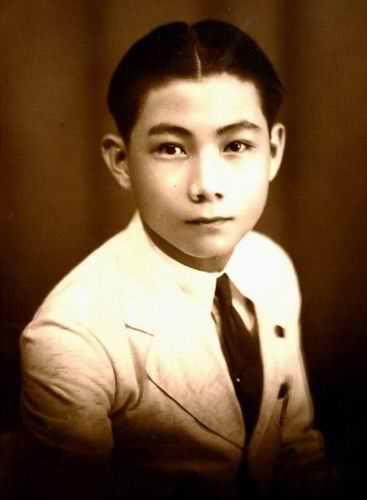
Circa 1936: Soo Hin at 15
PART THREE - GEYLANG IN THE 1930s
OUR NEW HOME
We arrived in Geylang by rickshaw after collecting our luggage. It was a long ride from Hill Street to Geylang, and I chatted happily with my father. I had not seen him for about 8 years and there was so much I wanted to share with him.
In anticipation of our arrival in Singapore, my father had rented a room above a bicycle shop along Geylang Road, close to Lorong 21. It was to be our new home. The room was about 12 square metres and we only had a single piece of furniture - 5 wooden planks lying across 2 wooden stools. It was used as a shelf cum storage space, and when we had visitors, it would be used as a bench. There was no chair or table, so we ate our meals on the floor. There was also no bed, so we slept on the floor.
It may sound terribly miserable by modern standards, but the standard of living in Singapore at that time was already better than in our village in China. There was running water and electricity, both of which were not available in our village. My father owned a provision store, and we did not have to do manual labour in the rice fields and vegetable farm. We were glad to be in Singapore.
Soon after we settled down in Geylang, my mother became friends with a lady living in the area called Heng Sua Tian (Wang Shanzhen). Heng Sua Tian and her family lived along Geylang Road, close to Lorong 15, and she spoke the same dialect as us, Teochew. Her husband, Yeo Joo Guang (Yang Ruguang), was a worker in a pineapple factory, and they had 6 children - 4 sons and 1 daughter. The eldest son, Soo Hwa, was married and had returned to China even before I arrived in Singapore. The eldest daughter, Sock Meng, was married and lived in Malaysia. The second son, Soo Kwee, was an actor in a Chinese Opera Troupe. The third son, Soo Soon, drowned when he was 12 years old. He died before my arrival in Singapore. The fourth son, Soo Hin, would later become my husband.
Heng Sua Tian and her family had been in Singapore for about 10 years. Soo Hin was only 2 years old when his family moved from China to Singapore. When I arrived in Singapore, Soo Hin was 13 years old and he was studying at a Chinese school called Tong Hwa School along Geylang Road, close to Lorong 29. My parents decided to send my younger brother, Yeo Chee, to that school as well. Everyday. Soo Hin would walk Yeo Chee to school and back home again.
Since I was female, my parents did not see the need to send me to school. In those days, many Chinese did not believe that females required an education. Traditionally, once girls grew up, they would get married and either became housewives or helpers in their husbands' business. Many Chinese believed that there was no reason for females to attend school at all.
In my first year in Singapore, I spent most of my time sewing clothes with my mother. The clothes we had brought from China were too thick for the hot and humid weather here. My father also did not require our help in his provision store, as he had the help of 2 workers.
My father's provision store was located at No. 305 Geylang Road, close to Lorong 17. Each day, I would visit the store twice - once in the afternoon during lunch and a second time during dinner. One of my father's workers cooked, so I would bring lunch and dinner home for my mother, Yeo Chee and I. My father ate in the store. It was opened from sunrise to 10.00 p.m. daily.
BIRTH
OF A NEW BROTHER
In 1935, on the 2nd day of the 2nd month of the Chinese lunar calendar,
my mother gave birth to another son, Chua Peng
Soon (Cai Bingsun). My mother had given birth at home alone.
Yeo Chee and I were out watching a wayang (street opera) performance
that afternoon. When we returned home, we were pleasantly surprised
to find our mother cradling our new-born brother!
My mother had given birth without the help of a doctor, midwife or anyone at all. She had learnt how to cut off a child's umbilical cord from my paternal grandmother, who had given birth to 10 children.
Shortly after Peng Soon's birth, Soo Hin's mother, Heng Sua Tian, suggested that we moved to a bigger room. Their family had just moved to a room on the 2nd floor of shophouse only 3 doors away from our home, and there was a vacant room next to theirs. My parents agreed and our family became neighbours with Soo Hin's family. I recall that below our rooms was a store selling galvanized ironware.
By then, however, Soo Hin was hardly around the Geylang area. He stopped attending Tong Hwa School and had found a job in a store selling goods imported from Shanghai. The store was owned by a Shanghainese couple and it was called "Hong Heng Trading Company". It was along South Bridge Road, near Chinatown, and it was opened everyday except Sundays. Soo Hin thus only returned to Geylang on Sundays. He was 14 years old at that time.
When Soo Hin stopped attending Tong Hwa Primary School, Yeo Chee, changed to different Chinese school closer to our home. The school was called Tong Chia School and it was along Lorong 16.
WORKING IN THE PROVISION STORE
By the time we moved to the room above the galvanized ironware store, one of my father's workers had left and I was required to help my father in his business. I was about 13 years old at that time. My mother remained at home to take care of my baby brother, Peng Soon.
Running a provision store was hard work. My father and I had to wake up early each morning to prepare for the morning marketing crowd. My father and I would organize and display some of our goods along the corridor in front of the store. I would hang fruits like bunches of bananas up for sale. My father would cut and slice fresh fruits and I would crush the ice for the iced fruit box. The store sold a wide variety of goods, like rice, spices, salted and preserved foods, fruits, vegetables, oil, bottled sauces, soft drinks, beer, cigarettes, etc.
In the afternoons, when the store was less crowded, I would return home to wash clothes and help my mother with other household chores. My father would ride his trishaw to Joo Chiat Road and other places to buy goods.
The premises for the provision store was rented from a Hokkien landlady. She was born in the Hokkien Province in China during the Qing Dynasty and she had bound feet, an object of beauty in that era.
The landlady was about 40 years old and she was a widow. She had 3 sons called Ng Cheng Yong, Ng Cheng Tong, and Ng Cheng Lim. She also had a 5 year old child bride, called Tan Chun Eng (nicknamed "Ah Yi"), living with them. In those days, it was common for families to buy young girls and raise them to be the wives for their sons. Ah Yi was bought and raised to be the wife of the landlady's youngest son, Ng Cheng Lim. I still keep in touch with Ah Yi and she is one of my oldest friends. Ng Cheng Lim was 5 years older than Ah Yi and he used to beat and bully Ah Yi when she was a child. After their marriage, however, the tables turned and Ng Cheng Lim became a hen-pecked husband! Ah Yi and I would laugh whenever we spoke about the old days and how well she had trained her husband. Ng Cheng Lim passed away about 2 years ago, and Ah Yi is now a widow with 4 children and many grandchildren.
Behind the provision store was a row of 4 small rooms. The landlady was a very enterprising woman. She had rented the whole of No. 305 Geylang Road for S$35 a month, and had sublet the front portion of the premises to my father for S$30 a month. She used the first 3 rooms behind my father's store as opium dens. The fourth room was where she, her sons and Ah Yi lived.
The opium dens were frequented by addicts who were poor. The opium supplied by the landlady was "second-hand" opium i.e. "used" opium which the landlady obtained cheaply. The landlady's opium dens were operated illegally and there were raids every few months. Every time the police came, all the opium smokers would flee the dens. The landlady was never once arrested.
My family lived in the room above the galvanized ironware store for only a few months before my father's second worker left. My father decided that the whole family should move into the provision store. My father did not have to pay additional rent, and my mother and I could help him tend the store.
The store was already crammed full of goods, and there was even less room when our family of 5 moved in. At night, we had to stack the goods up high, so we could find a place to lie down. In the mornings, we had to wake up early to un-stack the goods, arrange them properly and clear up the store for a new day of business.
On some days, my father would allow me to take some time off from work. I would take the opportunity to meet some friends, catch a wayang performance, visit the hair salon or buy some textile to make clothes. I remember it was 5 cents to take the trolley bus to the Chinatown area; 6 cents if I took the motor bus.
MORE BIRTHS
In or about 1937, my mother, who was pregnant once more, was warded at Kendang Kerbau Hospital. It was a difficult birth and the baby girl was stillborn. She was too young to be named. I never got to see her. Infant mortality rates during those times were relatively high. Of the 7 children (4 girls and 3 boys) my mother gave birth to, I am the only girl who survived.
After my mother was discharged from the hospital, she plunged herself into the hustle and bustle at the provision store and overcame her grief.
In 1939, on the 1st day of the 2nd month of the Chinese lunar calendar, my mother gave birth to my youngest brother, Chua Ting Kin (Cai Tingqing). He was born at Kendang Kerbau Hospital.
With the new addition, we were a family of 6. I was 17 years old, and it was about time to start my own family.
~ Return for Part Four ~
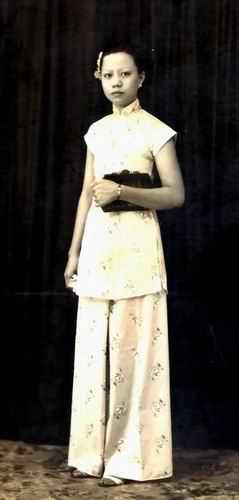
Circa 1940: Me at 18
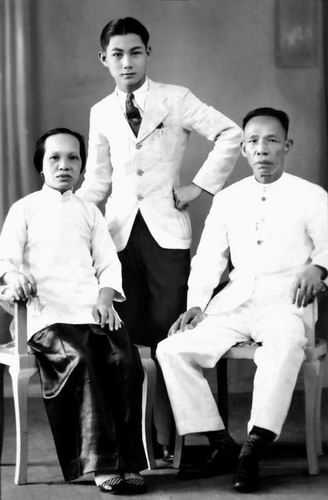
Circa 1937: Soo Hin with his parents, Yeo Joo Guang ang Heng Sua Tian
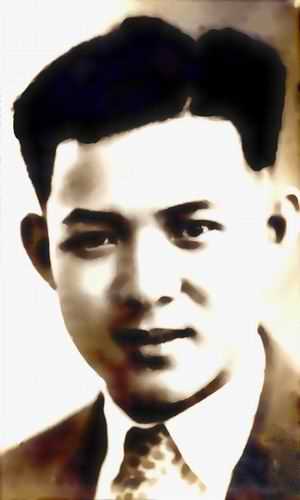
Soo Hwa
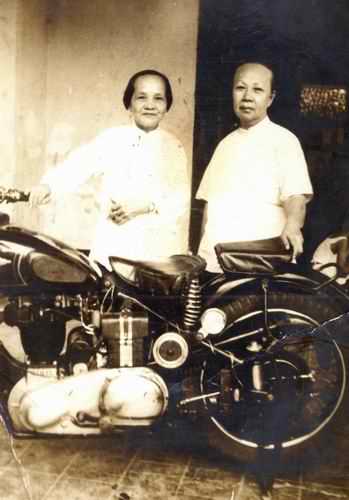
Heng Sua Tian with a groovy motorbike
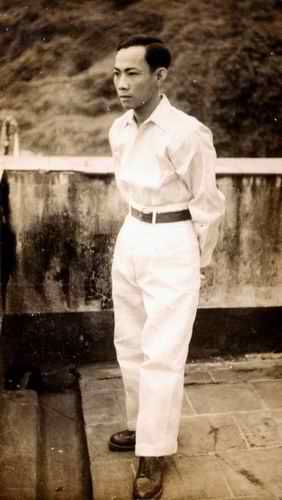
Soo Kwee
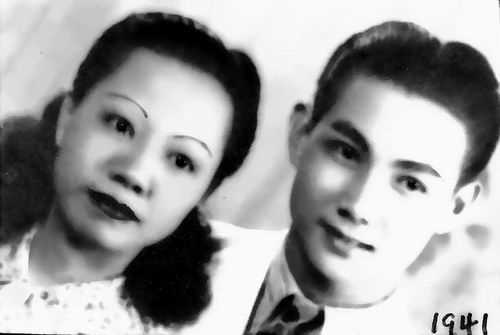
Circa 1941: Engaged
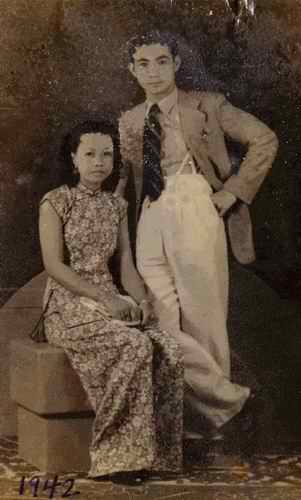
Circa 1942: Just Married
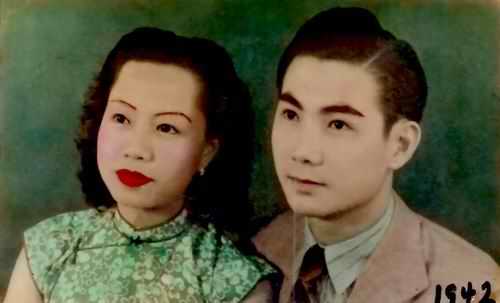
Circa 1942: Soo Hin coloured the photo himself
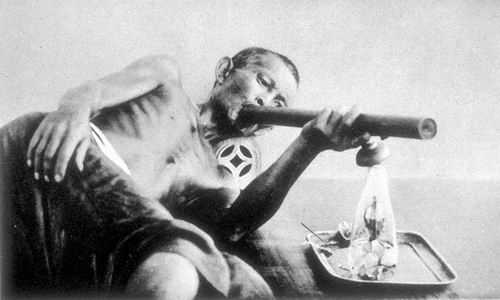
Chinese Opium Smoker
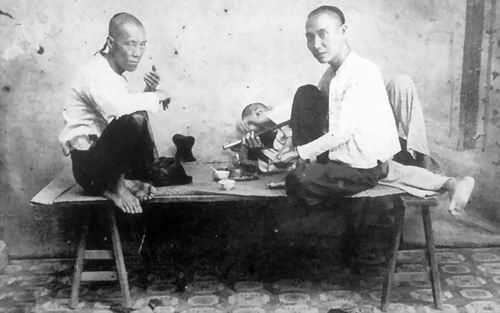
Opium Den
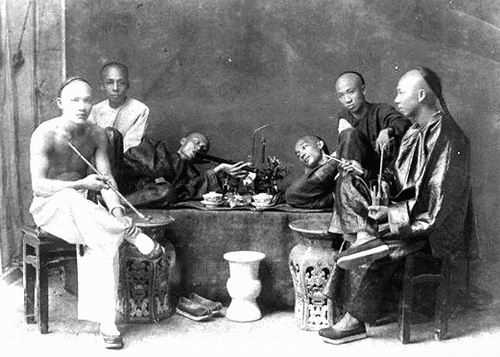
Opium Smoking during the Qing Dynasty